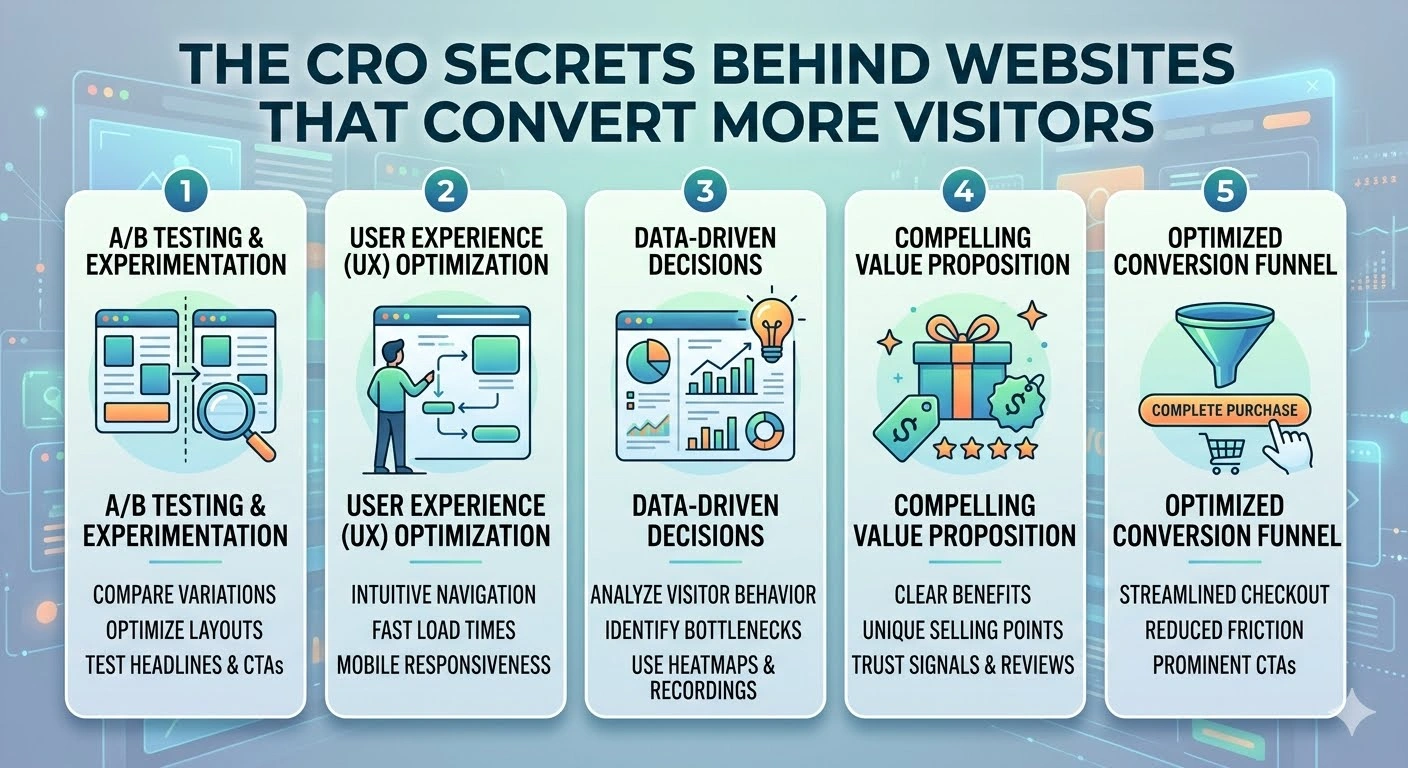
The CRO Secrets Behind Websites That Convert More Visitors
The CRO Secrets Behind Websites That Convert More Visitors | Getting thousands of visitors to a website sounds impressive, but traffic alone does not guarantee business success. A website can attract visitors through search engines, social media, advertising, or referrals and still generate very few leads or sales.
This is where conversion rate optimization (CRO) becomes important.
CRO focuses on improving a website so that a larger percentage of visitors take a desired action. That action could be purchasing a product, submitting a form, signing up for a newsletter, requesting a quote, or booking a service.
The most successful websites do not simply ask visitors to convert. They remove friction, build trust, communicate value clearly, and make the next step obvious.
So, what are the CRO secrets behind websites that convert more visitors?
What Is Conversion Rate Optimization?
Conversion rate optimization is the process of improving a website or landing page to increase the percentage of visitors who complete a desired action.
A simple conversion rate formula is:
Conversion Rate = Conversions ÷ Total Visitors × 100
For example, if 1,000 people visit a landing page and 50 complete a purchase or signup, the conversion rate is 5%.
The goal of CRO is not necessarily to increase traffic.
Instead, it asks an important question:
How can the existing traffic produce better results?
1. Make the Value Proposition Obvious
One of the biggest CRO mistakes is making visitors work too hard to understand what a website offers.
When someone lands on a page, they should quickly understand:
- What is being offered?
- Who is it for?
- What problem does it solve?
- Why should they care?
- What should they do next?
A strong headline can communicate the primary benefit immediately.
Instead of writing:
“Welcome to Our Digital Solutions Platform”
a clearer alternative might be:
“Create Professional Websites Without Hiring a Developer”
The second headline explains the benefit and target audience more directly.
2. Use One Clear Primary Call to Action
Websites often overwhelm visitors by presenting too many choices.
A page might contain buttons for:
- Buy Now
- Learn More
- Contact Us
- Download
- Subscribe
- View Products
- Book a Demo
Having multiple actions is not always wrong, but the primary goal of the page should be obvious.
A strong CTA tells visitors exactly what to do.
Examples include:
- Start Free Trial
- Get Your Quote
- Book a Consultation
- Download the Guide
- Create Your Account
The more clearly the next step is communicated, the less mental effort visitors need to make.
3. Reduce Friction
Every unnecessary obstacle can reduce conversions.
Friction can come from:
- Complicated forms
- Slow pages
- Confusing navigation
- Unexpected fees
- Required account creation
- Too many checkout steps
- Unclear instructions
- Broken buttons
Imagine a customer has already decided to purchase but encounters a checkout form asking for unnecessary information.
The customer may abandon the process.
Good CRO identifies these obstacles and removes them wherever possible.
4. Build Trust Before Asking for the Conversion
Visitors do not automatically trust a website.
They may wonder:
Is this company legitimate?
Will I actually receive what I paid for?
What happens if something goes wrong?
Trust signals can reduce these concerns.
Useful trust elements include:
- Customer reviews
- Testimonials
- Case studies
- Secure payment information
- Clear contact details
- Refund policies
- Guarantees
- Recognizable certifications
- Customer logos
Trust signals should be genuine and verifiable.
Fake testimonials or misleading claims may produce short-term gains but can seriously damage a business’s reputation.
5. Use Social Proof
People often look at what others have done before making a decision.
This is known as social proof.
For example, a website might show:
“Trusted by more than 10,000 customers.”
Or it could display customer testimonials describing specific results.
The strongest social proof is specific.
Instead of:
“Great service!”
a more useful testimonial might explain:
“Our team reduced the time required to process customer requests by 40% after switching to the platform.”
Specific experiences are more persuasive because they provide context.
6. Write Copy Around Customer Problems
Many websites focus too much on themselves.
They talk about:
- Their company
- Their history
- Their technology
- Their features
- Their awards
Visitors are usually more interested in how the product or service can help them.
Instead of simply listing a feature:
“Automated reporting dashboard.”
Explain the benefit:
“Generate performance reports automatically and spend less time compiling data.”
Features describe what something does.
Benefits explain why the customer should care.
7. Make the Website Easy to Scan
Most visitors do not read every word on a webpage.
They scan for information that seems relevant.
That means effective websites use:
- Short paragraphs
- Clear headings
- Bullet points
- Highlighted benefits
- Visual hierarchy
- Descriptive buttons
- Plenty of whitespace
A visitor should be able to understand the main message by quickly scanning the page.
Good design is not only about looking attractive.
It is also about making information easy to process.
8. Improve Page Speed
Website performance can have a direct impact on user experience.
Visitors are less likely to continue interacting with a page that takes too long to load.
Common causes of slow websites include:
- Large images
- Excessive scripts
- Poor hosting
- Unnecessary plugins
- Unoptimized code
- Too many third-party services
Improving performance can make the website feel more responsive and reduce frustration.
A faster website can also support better user experience across mobile devices and slower connections.
9. Design for Mobile Users
A website may look excellent on a desktop but perform poorly on a smartphone.
That is a major problem because many users browse and shop primarily on mobile devices.
Check whether:
- Buttons are easy to tap
- Text is readable
- Forms are comfortable to complete
- Images fit the screen
- Navigation is simple
- Checkout works properly
Mobile CRO should not simply shrink the desktop version.
The experience should be designed around how people actually use smartphones.
10. Make Forms Simple
Forms are often one of the biggest sources of conversion friction.
A business may want to collect as much information as possible, but every additional field creates another opportunity for abandonment.
If a visitor only needs to request a quote, they may not need to provide extensive personal information.
Start with the information that is genuinely necessary.
For example:
Simple form:
- Name
- Project details
This may be more effective than a long form asking for dozens of fields.
11. Create a Sense of Clarity
Visitors should not have to guess what happens after clicking a button.
Compare:
Submit
with:
Get My Free Quote
The second option communicates the outcome more clearly.
Clear microcopy can also answer questions near important actions.
For example:
“No credit card required.”
or:
“We’ll respond within one business day.”
Small details like these can reduce uncertainty.
12. Use Visual Hierarchy Strategically
Not every element on a page should have equal visual importance.
A strong page guides attention toward the most important information.
A typical hierarchy might be:
Headline → Value proposition → Supporting information → Social proof → CTA
Design elements such as font size, spacing, contrast, and placement can help establish this hierarchy.
The objective is not to make everything stand out.
It is to make the right things stand out.
13. Test Instead of Guessing
One of the most important CRO principles is experimentation.
A design that looks better to a marketing team is not necessarily the design that converts better.
A/B testing can compare two versions of an element.
For example:
Version A: “Start Now”
Version B: “Start Your Free Trial”
If Version B generates more qualified conversions under a sound test design, the data provides evidence about which message works better.
Tests can involve:
- Headlines
- CTAs
- Images
- Forms
- Pricing displays
- Page layouts
- Product descriptions
- Testimonials
The key is to test meaningful changes and evaluate results carefully rather than changing everything simultaneously.
14. Understand Where Visitors Come From
Not every visitor has the same intent.
Someone arriving through a search query such as:
“best accounting software for small business”
has a different intent from someone clicking a general social media advertisement.
CRO should consider the visitor’s source and expectations.
A landing page should match the promise made before the click.
If an advertisement promotes a free trial but the landing page immediately asks visitors to purchase a premium plan, the mismatch can create confusion and reduce conversions.
15. Address Objections Before They Become Abandonment
Potential customers often have questions that prevent them from converting.
For example:
- Is it safe?
- How much does it cost?
- Can I cancel?
- Is there a refund?
- Does it work with my existing tools?
- How quickly can I get started?
A strong website answers these questions before visitors have to search for the information.
Frequently asked questions, comparison tables, guarantees, demonstrations, and transparent pricing can all reduce uncertainty.
16. Use Analytics to Find the Real Problems
CRO should be based on evidence.
Analytics can help identify where visitors leave the conversion process.
For example:
Landing page → Product page → Cart → Checkout → Purchase
If many users reach checkout but leave before completing payment, the problem may not be the landing page.
Potential issues could include:
- Unexpected costs
- Complicated checkout
- Limited payment options
- Technical problems
- Lack of trust
- Confusing instructions
Understanding the funnel helps businesses focus their optimization efforts where they matter most.
17. Don’t Optimize Only for Conversion Rate
A higher conversion rate is not automatically better.
Imagine one version of a website generates 10% more signups, but most of those users never become paying customers.
Another version generates fewer signups but attracts customers who spend significantly more.
The second version may be more valuable.
For this reason, businesses should consider metrics such as:
- Revenue per visitor
- Customer acquisition cost
- Average order value
- Lead quality
- Customer lifetime value
- Retention rate
CRO should ultimately improve business outcomes, not simply produce a higher percentage on a dashboard.
Common CRO Mistakes
Several mistakes appear repeatedly on websites.
Changing Too Many Things at Once
If everything changes simultaneously, it becomes difficult to know what caused the result.
Copying Competitors
A strategy that works for another business may not work for yours.
Focusing Only on Design
A beautiful website can still have poor messaging or a confusing conversion path.
Using Too Many Pop-Ups
Pop-ups can attract attention, but excessive interruptions can frustrate visitors.
Hiding Important Information
Trying to force visitors into a conversion without clearly explaining pricing, terms, or limitations can destroy trust.
Ignoring Existing Customers
Optimization should not focus exclusively on acquiring new users. Improving onboarding, retention, and repeat purchases can also create significant value.
A Simple CRO Framework
A practical CRO process can be organized into five steps.
Step 1: Identify the Goal
Decide what conversion you want to improve.
Step 2: Analyze User Behavior
Use analytics, surveys, customer feedback, and session data where appropriate.
Step 3: Find Friction
Identify where users become confused, hesitate, or abandon the process.
Step 4: Create a Hypothesis
For example:
“If we simplify the signup form from eight fields to four, more visitors will complete registration.”
Step 5: Test and Measure
Run the change, compare the results, and determine whether the evidence supports the hypothesis.
Then repeat the process.
CRO is not a one-time project.
It is an ongoing cycle of research, testing, learning, and improvement.
The Real Secret Behind High-Converting Websites
There is no single button color, headline formula, or design trick that guarantees high conversions.
The real secret is understanding the visitor.
High-converting websites answer three fundamental questions quickly:
- What is this?
- Why should I care?
- What should I do next?
When those questions are answered clearly, the conversion process becomes easier.
The website is no longer forcing visitors to figure everything out themselves.
It is guiding them.
The biggest CRO secret is surprisingly simple: make it easier for the right visitor to make the right decision.
High-converting websites combine clear messaging, strong value propositions, trustworthy social proof, simple navigation, fast performance, mobile-friendly design, low-friction forms, and well-designed calls to action.
But successful CRO goes beyond changing buttons or colors.
It requires understanding customer intent and using real evidence to improve the entire user journey.
The best websites do not manipulate visitors into converting.
They remove unnecessary confusion and friction so that people who genuinely want the product or service can move forward with confidence.
That is what makes CRO a long-term growth strategy rather than just a collection of website tricks.

Different Paths in SEO: Black Hat and White Hat
Different Paths in SEO: Black Hat and White Hat | Search engine optimization, or SEO, is one of the most important strategies for improving a website’s visibility in search results. Businesses, bloggers, and online publishers use SEO to attract organic traffic, reach potential customers, and build a long-term digital presence.
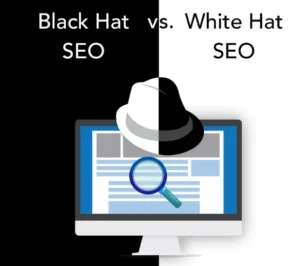
However, not every SEO strategy follows the same philosophy.
Two commonly discussed approaches are Black Hat SEO and White Hat SEO. They represent very different ways of trying to improve search visibility. White Hat SEO focuses on creating value for users and following search engine guidelines, while Black Hat SEO relies on manipulative techniques designed to influence rankings.
Understanding the difference can help website owners choose strategies that are sustainable and less likely to create serious problems in the future.
What Is White Hat SEO?
White Hat SEO refers to optimization practices that generally follow search engine guidelines and prioritize users.
The goal is not simply to manipulate rankings. Instead, websites improve their content, structure, usability, and authority so that search engines have legitimate reasons to rank them.
Common White Hat SEO practices include:
- Creating useful, original content
- Researching relevant search queries
- Improving website speed and usability
- Optimizing page titles and headings
- Building logical internal links
- Earning high-quality backlinks
- Improving mobile accessibility
- Providing accurate and helpful information
White Hat SEO usually requires patience, but it can create a stronger foundation for long-term organic growth.
What Is Black Hat SEO?
Black Hat SEO describes techniques that attempt to manipulate search rankings in ways that violate or circumvent search engine guidelines.
The objective is often to achieve faster results by exploiting weaknesses in ranking systems rather than improving the experience for users.
Examples can include:
- Keyword stuffing
- Cloaking
- Hidden text
- Manipulative link schemes
- Automatically generated low-quality content
- Doorway pages
- Misleading redirects
Search engines continuously update their systems to identify and reduce the impact of manipulative practices.
Google’s Search Essentials provide guidance on technical requirements, spam policies, and best practices for websites seeking visibility in Google Search.
White Hat vs. Black Hat SEO
The easiest way to understand the difference is to look at the intention behind the strategy.
| White Hat SEO | Black Hat SEO |
|---|---|
| Focuses on users | Focuses primarily on rankings |
| Follows search engine guidelines | Violates or attempts to circumvent guidelines |
| Builds long-term value | Often seeks quick results |
| Uses relevant, useful content | May use manipulative or low-quality content |
| Earns authority naturally | May manipulate links or other signals |
| Generally more sustainable | Higher risk of penalties or ranking losses |
The distinction is not always about a single tactic. Context and implementation matter.
For example, using keywords is a normal part of SEO. Repeating the same keyword unnaturally throughout a page simply to manipulate rankings can become keyword stuffing.
Keyword Stuffing: When Optimization Goes Too Far
Keywords help search engines understand what a page is about.
However, repeatedly inserting the same phrase into a page can make content difficult to read and may be considered spammy.
For example, a sentence such as:
“Best shoes are the best shoes because our best shoes are the best shoes for buying the best shoes.”
is clearly written for search engines rather than humans.
A better approach is to use natural language and related terms while answering the user’s actual question.
Modern SEO is less about repeating a keyword and more about demonstrating relevance and usefulness.
Link Building: Quality Over Quantity
Backlinks can be valuable because they can help search engines understand the authority and relevance of a website.
However, buying or creating large numbers of manipulative links can create problems.
White Hat link building focuses on earning references through useful content, legitimate partnerships, digital PR, research, resources, or other genuine reasons for another website to link to a page.
Black Hat approaches may attempt to manufacture artificial authority through link schemes.
The difference is simple:
White Hat: earn links because the content deserves them.
Black Hat: create or manipulate links primarily to influence rankings.
Content Quality Matters
Content is one of the most important areas where White Hat and Black Hat approaches can diverge.
A White Hat strategy focuses on answering the user’s question clearly and accurately.
A Black Hat strategy may prioritize producing large amounts of content simply to capture search traffic, even when the content provides little value.
Google’s documentation emphasizes creating helpful, reliable, people-first content rather than producing content primarily for search engine rankings.
This means website owners should ask:
Would this page still be useful if search engines did not exist?
If the answer is yes, the content is more likely to have genuine value.
The Risk of Black Hat SEO
The biggest attraction of Black Hat SEO is speed.
Manipulative techniques can sometimes produce rapid ranking improvements, particularly when they exploit weaknesses in search algorithms.
But those gains can be unstable.
Search engines may detect the behavior, algorithmic systems may reduce its effectiveness, or a manual action may affect a website’s visibility.
Google explains that manual actions can be applied when a website violates spam policies, potentially affecting how pages appear in Search.
For a business that depends heavily on organic traffic, losing search visibility can be extremely expensive.
Is Black Hat SEO Ever Worth the Risk?
For most legitimate businesses and long-term websites, Black Hat SEO is difficult to justify.
A temporary ranking increase is not necessarily valuable if it results in lost traffic later.
Imagine a business spends years building a website and developing organic visibility. If aggressive tactics cause the site to lose rankings, recovering that visibility can take significant time and resources.
This is why sustainable SEO generally focuses on strategies that remain useful even as search algorithms evolve.
Why White Hat SEO Takes Longer
White Hat SEO can feel slow because it requires real work.
A website may need to:
- Research its audience.
- Create useful content.
- Improve technical performance.
- Earn relevant links.
- Build topical authority.
- Improve user experience.
- Analyze performance.
- Update content over time.
There is no guarantee that every page will rank quickly.
However, the work creates assets that can continue generating value.
A well-written article can attract visitors for years. A useful research report can earn natural backlinks. A technically strong website can provide a better experience across many pages.
Gray Hat SEO: The Middle Ground
Between Black Hat and White Hat SEO is what marketers sometimes call Gray Hat SEO.
Gray Hat techniques may not clearly violate a specific rule but can involve strategies designed primarily to influence search rankings rather than improve user value.
This category can be difficult to define because search engine guidelines change and different tactics carry different levels of risk.
For businesses, the safest approach is to prioritize strategies that clearly improve the website for users.
The Role of AI in Modern SEO
Artificial intelligence has introduced new opportunities and challenges for SEO.
AI can help marketers with tasks such as:
- Brainstorming topics
- Organizing research
- Creating content outlines
- Analyzing search intent
- Improving readability
- Identifying content gaps
However, automatically generating large volumes of low-value pages simply to attract search traffic can create quality problems.
AI should ideally support human expertise and editorial judgment rather than become a shortcut for publishing large amounts of generic content.
The goal remains the same: create useful information for real people.
How to Choose the Right SEO Strategy
For most websites, the best approach is to build an SEO strategy around long-term value.
Start by understanding what your audience needs. Then create content that genuinely answers those needs.
Next, make sure search engines can access and understand your website. Improve technical performance, organize your content logically, and develop legitimate authority.
A practical strategy might look like this:
Research → Create useful content → Optimize naturally → Improve user experience → Earn authority → Measure → Update
This process may take longer than aggressive ranking tactics, but it provides a much stronger foundation.
Black Hat and White Hat SEO represent two very different paths to search visibility.
Black Hat SEO attempts to manipulate search systems through techniques that can violate guidelines or create significant ranking risks. White Hat SEO focuses on users, quality, relevance, and sustainable growth.
For a website intended to survive and grow over the long term, White Hat SEO is generally the safer and more valuable approach.
Search algorithms will continue to change. Specific ranking factors may evolve, and new technologies will reshape how people search for information. But one principle remains reliable:
Create something genuinely useful, make it accessible to search engines, and give people a good reason to trust your website.
That is the foundation of sustainable SEO.
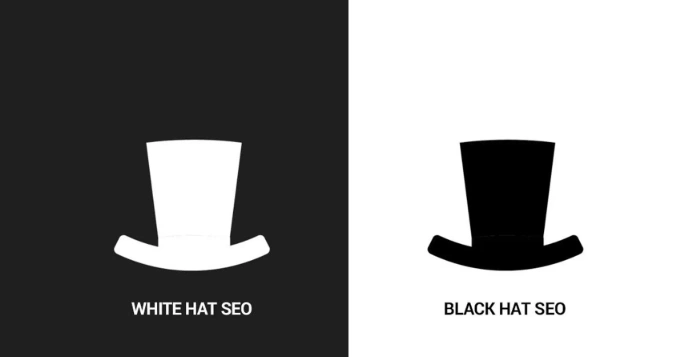
Black Hat SEO Techniques Applied with White Hat Principles
Black Hat SEO Techniques Applied with White Hat Principles: Understanding the Difference Between Risk and Innovation

Black Hat SEO Techniques Applied with White Hat Principles | Search Engine Optimization (SEO) has always been a competitive field where businesses and content creators look for ways to improve rankings, attract traffic, and increase online visibility. Over the years, various SEO strategies have emerged, ranging from ethical White Hat SEO techniques to risky Black Hat SEO practices that attempt to manipulate search engine algorithms.
The phrase “Black Hat SEO Techniques Applied with White Hat Principles” represents an interesting approach: understanding aggressive SEO concepts while applying them through ethical, sustainable, and search-engine-friendly methods. Instead of violating guidelines, marketers can learn from the goals behind black hat tactics and transform them into legitimate optimization strategies.
What Is Black Hat SEO?
Black Hat SEO refers to techniques designed to improve search engine rankings by manipulating algorithms rather than focusing on providing value to users.
These methods often violate search engine guidelines and can result in penalties, ranking drops, or complete removal from search results.
Common examples of Black Hat SEO include:
- Keyword stuffing
- Hidden text and hidden links
- Cloaking
- Automated low-quality content
- Link schemes
- Private Blog Networks (PBNs)
- Duplicate content manipulation
- Fake user signals
While these techniques may produce short-term gains, they often create long-term risks.
What Is White Hat SEO?
White Hat SEO focuses on improving rankings through strategies that follow search engine guidelines and prioritize user experience.
The main goal is to create valuable content, improve website quality, and build genuine authority.
Examples of White Hat SEO practices include:
- Creating high-quality content
- Optimizing website speed
- Improving user experience
- Building natural backlinks
- Using proper keyword research
- Optimizing website structure
- Providing accurate and helpful information
White Hat SEO takes more time but creates sustainable growth.
Why Learn Black Hat SEO Techniques?
Understanding black hat methods does not mean using them illegally or against search engine rules. Learning about them helps SEO professionals recognize:
- How search engine manipulation works
- Why certain websites receive penalties
- How competitors may attempt unfair advantages
- How to protect websites from harmful strategies
- How to improve SEO systems ethically
Many successful SEO experts study black hat techniques to understand algorithm weaknesses and create stronger white hat strategies.
Transforming Black Hat Ideas into White Hat Strategies
The key difference between black hat and white hat SEO is often the intention behind the technique.
A black hat approach tries to trick search engines.
A white hat approach tries to improve the experience for users while naturally earning search engine trust.
1. Keyword Stuffing vs Strategic Keyword Optimization
Black Hat Method:
Keyword stuffing involves repeatedly using keywords unnaturally throughout content to manipulate rankings.
Example:
“Best SEO services are the best SEO services because our SEO services provide the best SEO services.”
This creates poor readability and damages user experience.
White Hat Transformation:
Use keyword research to understand user intent and naturally include relevant terms.
Better practices include:
- Using keywords in meaningful locations
- Writing naturally for readers
- Adding related terms and semantic keywords
- Answering search intent
The goal is not keyword frequency but content usefulness.
2. Link Schemes vs Natural Link Building
Black Hat Method:
Some websites attempt to manipulate rankings through purchased links, excessive link exchanges, or artificial backlink networks.
White Hat Transformation:
Create content that naturally attracts backlinks.
Examples include:
- Original research
- Helpful guides
- Industry reports
- Expert interviews
- Valuable resources
Instead of forcing links, businesses earn authority through credibility.
3. Automated Content vs AI-Assisted Quality Content
Black Hat Method:
Publishing large amounts of automatically generated, low-value content designed only for search engines.
White Hat Transformation:
Use artificial intelligence as a productivity tool while maintaining human quality control.
Ethical AI SEO includes:
- Research assistance
- Content outlining
- Idea generation
- Editing support
- Improving readability
The final content should provide real value to readers.
4. Cloaking vs User-Focused Optimization
Black Hat Method:
Cloaking shows different content to search engines and users to manipulate rankings.
White Hat Transformation:
Create pages that satisfy both users and search engines.
Examples:
- Clear page structure
- Accurate titles
- Helpful descriptions
- Proper internal linking
- Mobile-friendly design
The same valuable content should be available to everyone.
5. PBNs vs Authority Building
Black Hat Method:
Private Blog Networks attempt to artificially create backlinks using controlled websites.
White Hat Transformation:
Build genuine authority through relationships and valuable contributions.
Better approaches include:
- Guest publishing on reputable websites
- Industry partnerships
- Community participation
- Digital PR campaigns
Real authority comes from trust, not manipulation.
Advanced SEO Strategies Inspired by Black Hat Thinking
Some concepts associated with black hat SEO can inspire ethical innovation when applied correctly.
Competitor Analysis
Instead of copying competitors’ shortcuts, analyze:
- Their content structure
- Keyword opportunities
- Backlink sources
- User engagement strategies
Then create something better.
Technical SEO Improvements
Black hat practitioners often search for algorithm weaknesses. White hat professionals can use similar curiosity to improve technical performance.
Examples:
- Fixing broken links
- Improving website architecture
- Enhancing page speed
- Removing duplicate pages
- Improving indexing efficiency
Search Intent Optimization
The smartest SEO strategy is understanding what users actually want.
Modern search engines prioritize pages that:
- Answer questions clearly
- Provide complete information
- Solve problems
- Create positive experiences
Optimizing for humans naturally improves search performance.
The Risks of Using Real Black Hat SEO
Although black hat tactics may appear attractive because of fast results, they carry serious risks.
Potential consequences include:
- Search engine penalties
- Loss of organic traffic
- Website reputation damage
- Lower user trust
- Recovery challenges
A website built on manipulation can disappear quickly when search algorithms improve.
The Future of SEO: Ethical Innovation
The future of SEO belongs to websites that combine creativity, technology, and user-focused strategies.
Successful SEO professionals will continue exploring new methods, but the strongest approaches will always focus on:
- Quality content
- Technical excellence
- Genuine authority
- User satisfaction
- Long-term trust
The best lesson from black hat SEO is not how to manipulate search engines, but how to understand them better.
Black Hat SEO Techniques Applied with White Hat Principles shows that knowledge of risky SEO tactics can be valuable when used responsibly. By understanding manipulation methods, marketers can create stronger defenses and develop smarter optimization strategies.
The goal of modern SEO is not to trick algorithms but to build websites that deserve higher rankings. Combining technical knowledge with ethical practices creates sustainable growth and long-term success in search engine optimization.